Public education and outreach
Learn more about Truckee Sanitary District’s public education and outreach through these topics:
Sewer system graphic
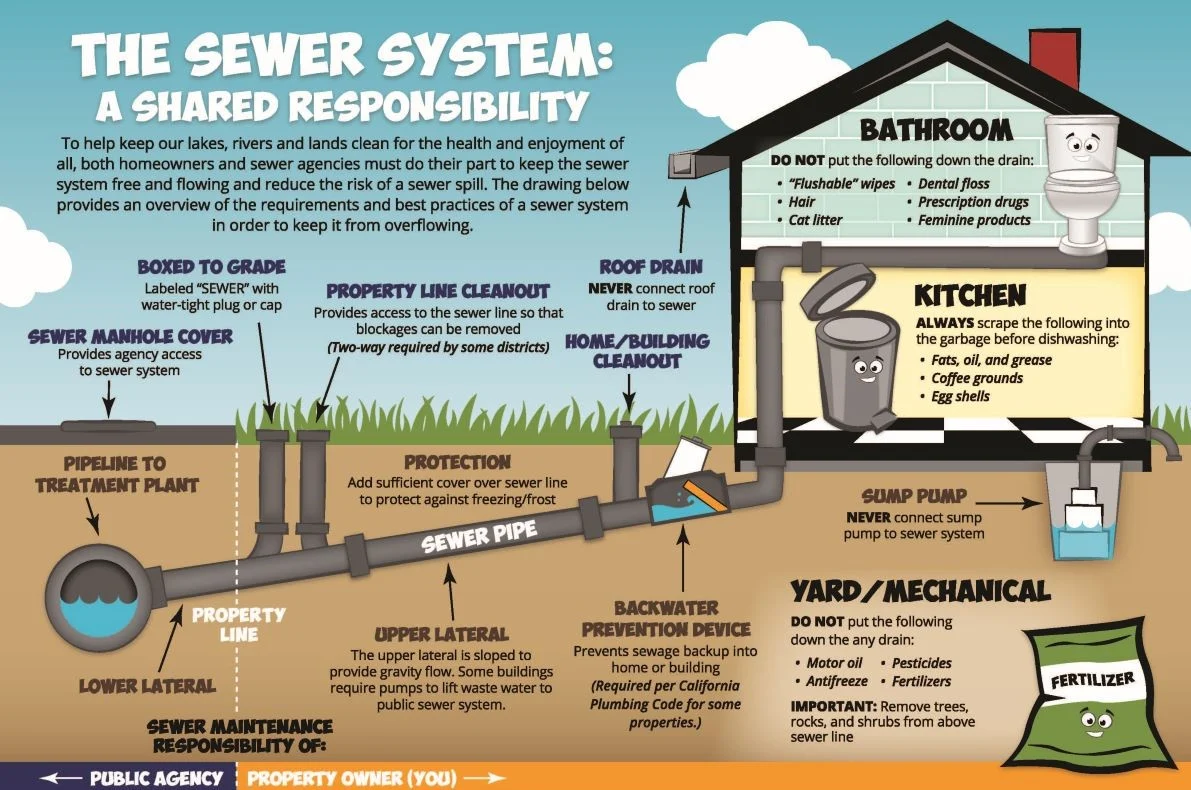
What does the sewer system look like under your house? The following graphic shows the components of the sewer system and what is the responsibility of Truckee Sanitary District and the responsibility of the property owner.
Where wastewater goes
What happens underground in the sewer pipes after you flush?
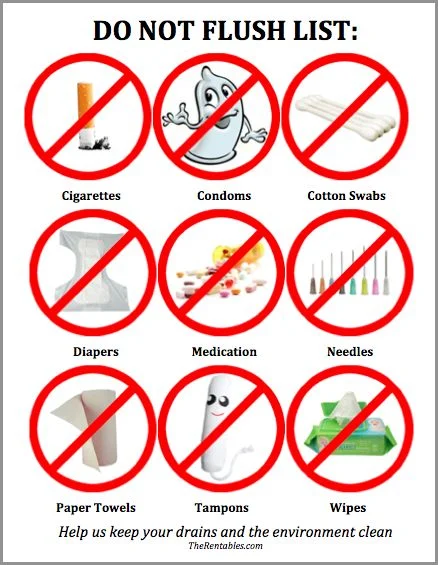
What NOT to put in the pipes
1. “Flushable” wipes
While “flushable” wipes may go down the toilet when you flush, they can cause extensive damage to sewer laterals (pipes) & systems as well as treatment plants. Not only in Truckee, but around the world, “flushable” wipes have caused serious clogs in the pipes. Clogs can lead to spills, which lead to costly repairs and environmental damage.
As you can see in the photos, the wipe (Fig. 1) has not been broken down. You can see white remnants of toilet paper (Fig. 2). Because toilet paper breaks down like it does, it can pass through laterals and treatment plant sorting machines. Wipes can get stuck and cause other items in the lateral to get stuck causing clogs.
Extreme clogs are known as “Fatbergs”. A fatberg is a big clump of wipes, fat, oil, grease, dirt & debris trapped in the pipes creating an iceberg-like formation. For more information about fatbergs, read this article, “Meet the Fatbergs”
This Washington Post article shows how bad wipes can be for the underground systems. “A nasty pandemic problem: More flushed wipes are clogging pipes, sending sewage into homes”
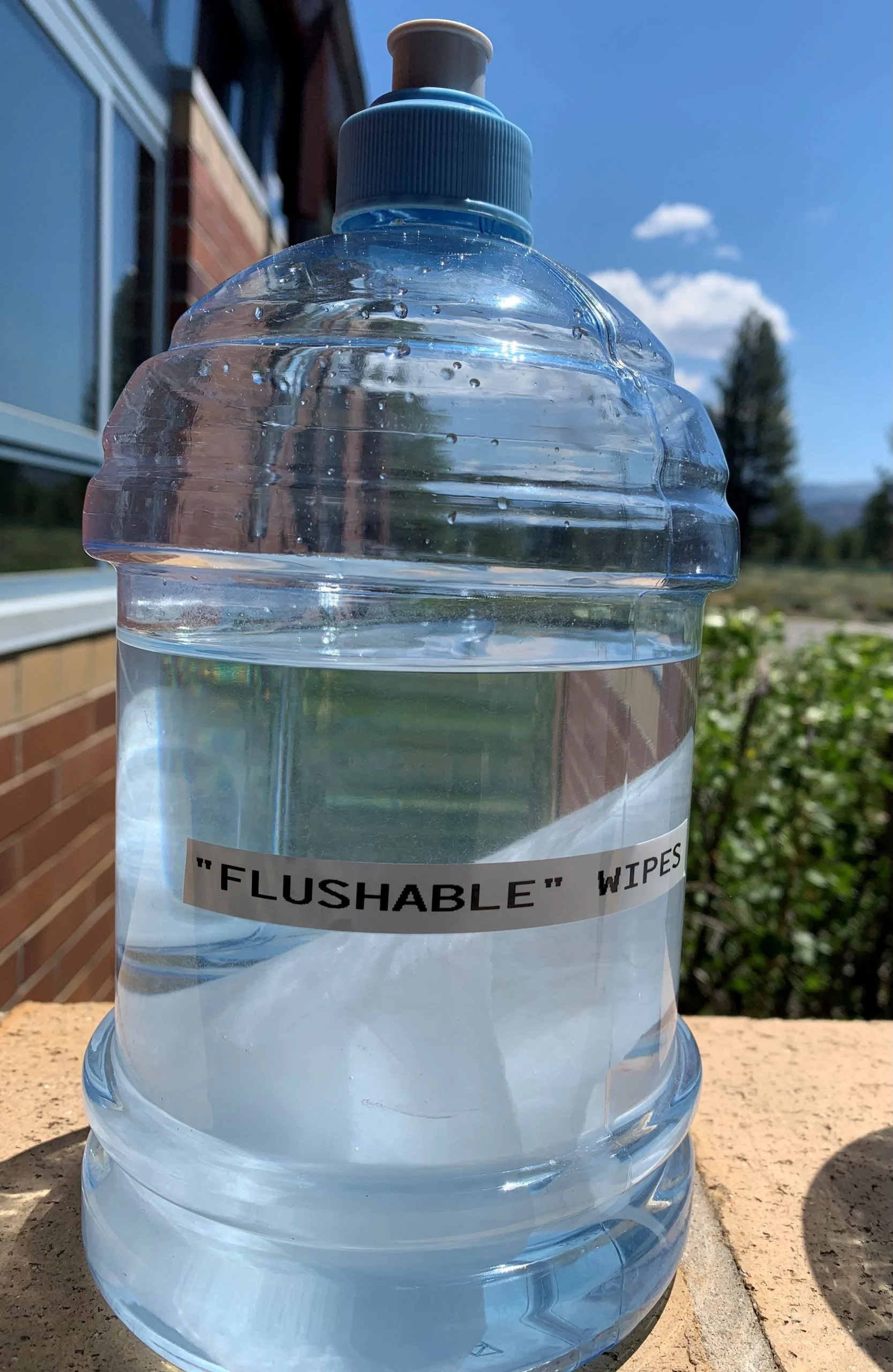
Fig. 1 A water jug with water and undissolved flushable wipes.
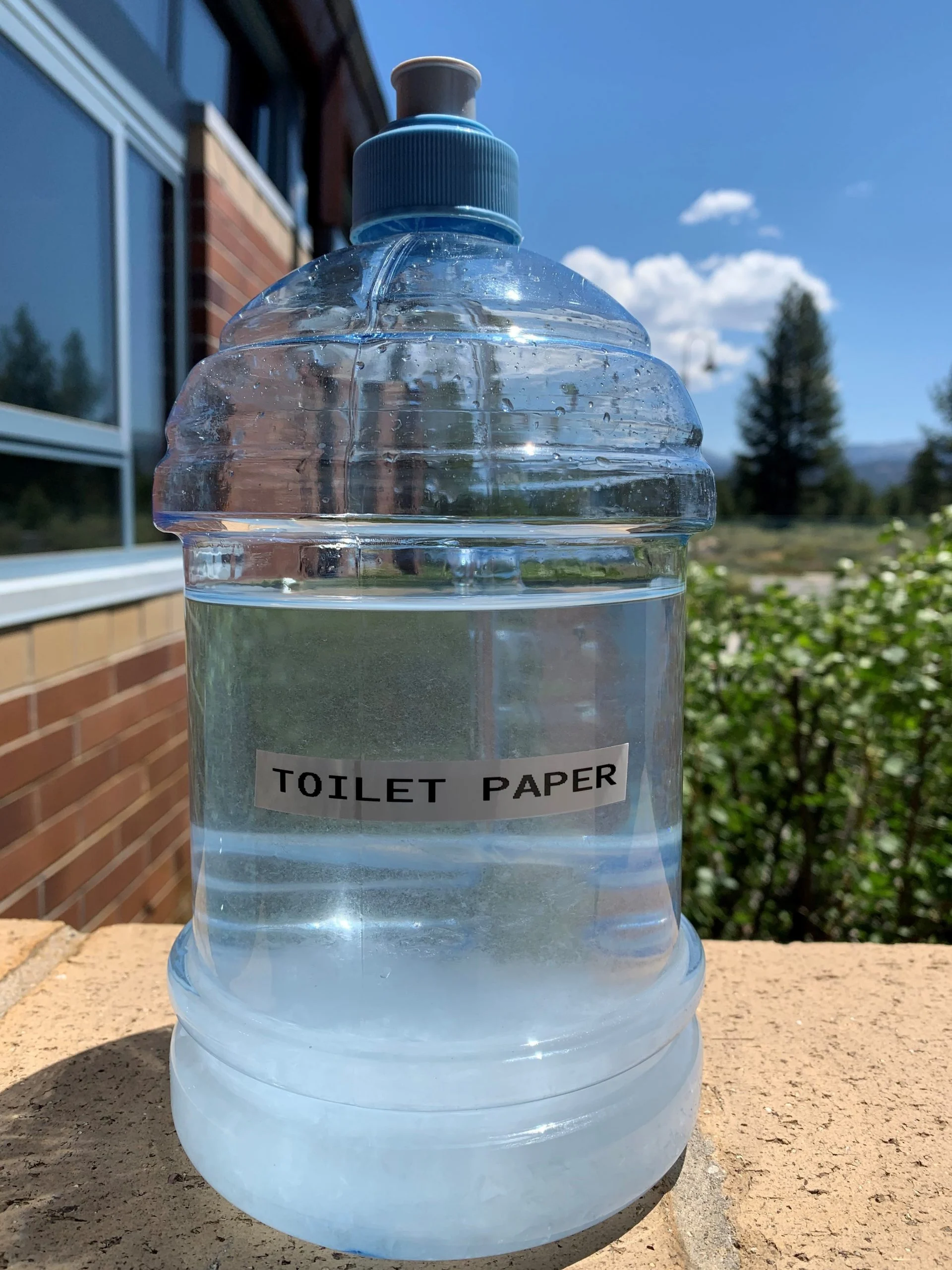
Fig. 2 A water jug with water and dissolved toilet paper.
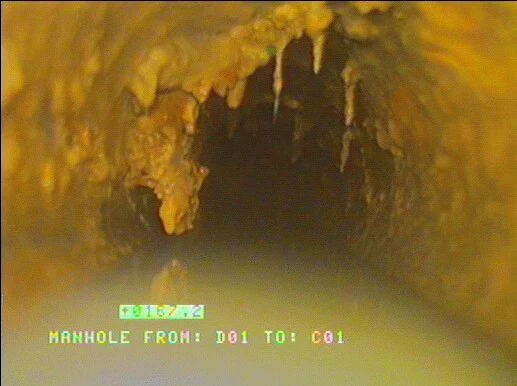
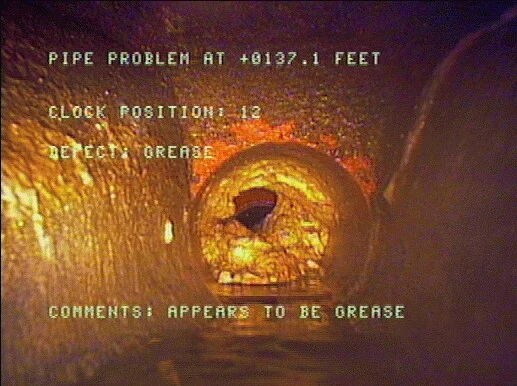
Examples of FOG in Truckee sewer laterals
2. Fats, Oil & Grease aka FOG
When fat, oil & grease are washed down the drain, it can solidify & cause clogs in pipes. This can lead to spills, which are not only gross, but harmful to the environment. TSD prides itself on the protection of our beautiful home. In 2020, TSD crews responded to 5, category 3 spills (less than 1,000 gallons and did not reach surface waters). Our goal is to respond to less each year (if you notice a wastewater spill or smell sewer, please call us at 530-587-3804).
Examples of FOG:
- Bacon Grease
- Lard
- Dairy Products
- Salad Dressing
- Gravy
- Vegetable Oil
- Food Scraps
How do you dispose of FOG?
- Pour excess FOG into an empty aluminum can or a fat trapper (also available at the TSD booth at Truckee Community Events)
- Scrape pan/plate clean using a spatula or a grease squeegee (available at the TSD booth at Truckee Community Events)
- Wipe pan/plate with paper towel
- Once can is full throw it away
Remember, CEASE THE GREASE!
3. Common household items to keep out of the drain
Keep these items out of the drains:
- Coffee Grounds. Why? Coffee grounds do not break down in water, they clump together & can form clumps.
- What to do with Coffee Grounds? 5 useful DIYs For Your Coffee Grounds
- Medications. Why? Pharmaceuticals can pollute our water & unintentionally expose not only us, but wildlife to the chemicals in these medications.
- Conventional Cleaning Products. Why? Like medications, cleaning products can be disruptive to the water ecosystem.
- Read the labels on cleaners for proper disposal. Water-soluble & all-natural cleaning products are environmentally friendly options.
- Kitty Litter – Even Flushable Kitty Litter. Why? The most obvious answer is, kitty litter can clump and clog drains. It dos not get destroyed during water treatment and can be a threat to marine species.
- Throw litter in the trash. You could also try “green” litter options made from wood shavings or recycled newspaper.